

Key signs that your chimney needs cleaning include
smoke entering your home, strong odors, difficulty maintaining a fire, and visible accumulation of black, tar-like residue known as creosote. The National Fire Protection Association (NFPA) recommends annual inspections and cleaning as needed.
Visible and Olfactory Signs
- Visible Creosote/Soot Buildup: Look inside your chimney flue with a flashlight. If you see black, oily marks, a shiny, tar-like substance, or a layer of sooty buildup that is 1/8 inch thick or more, it’s time for a professional cleaning.
- Unpleasant Odors: A strong, lingering smoky or musty smell, especially when the fireplace is not in use or during humid weather, often indicates significant creosoteaccumulation, trapped moisture, or a dead animal in the chimney.
- Soot or Debris Falling: If you notice chunks of black, crumbling debris, soot, or bits of masonry falling into your fireplace, it indicates heavy buildup or potential structural damage that needs immediate attention.
- Blackened Damper: The damper (the metal plate that opens and closes the flue) may have a black, oily coating, which is another indicator of creosote buildup.
Performance Issues
- Smoke Entering the Room: A properly functioning chimney creates a draft that pulls smoke and gases up and out of the house. If smoke is backing up into your living space, the chimney may be blocked by creosote, an animal nest, or other debris, which can also lead to dangerous carbon monoxide exposure.
- Difficulty Starting or Maintaining a Fire: Blockages in the chimney restrict airflow and starve the fire of necessary oxygen, making it hard to light or keep the fire burning properly.
- Weak or Poor Burning Fires: If your fire seems sluggish or burns less efficiently than usual, it is likely due to airflow issues caused by an obstruction.
Other Warning Signs
- Animal Noises or Evidence: Scratching, chirping, or flapping noises coming from inside the chimney, as well as the presence of nesting materials, suggest that animals have taken up residence and created a potentially flammable blockage.
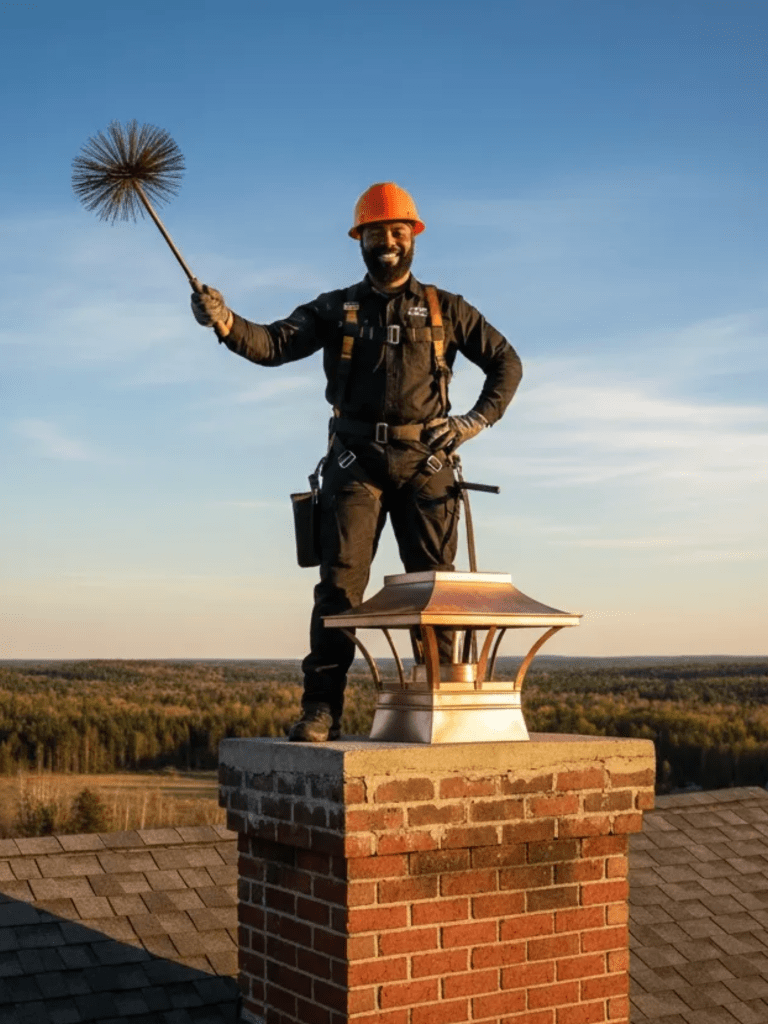
- Damaged Chimney Cap/Crown: A damaged or missing chimney cap/crown can allow water, debris, and animals to enter the flue, leading to a host of problems.
- Cracked or Damaged Masonry/Liner: Shards of the chimney liner in the firebox, or cracked/crumbling exterior bricks (spalling) and mortar joints, indicate structural issues, often caused by moisture or a previous, unnoticed chimney fire. You cannot burn green wood inside a metal chimney liner, this act void the lifetime warranty. (A fire will happen)
If you notice any of these signs, stop using your fireplace immediately and schedule a professional chimney inspection and cleaning with a certified chimney sweep.

